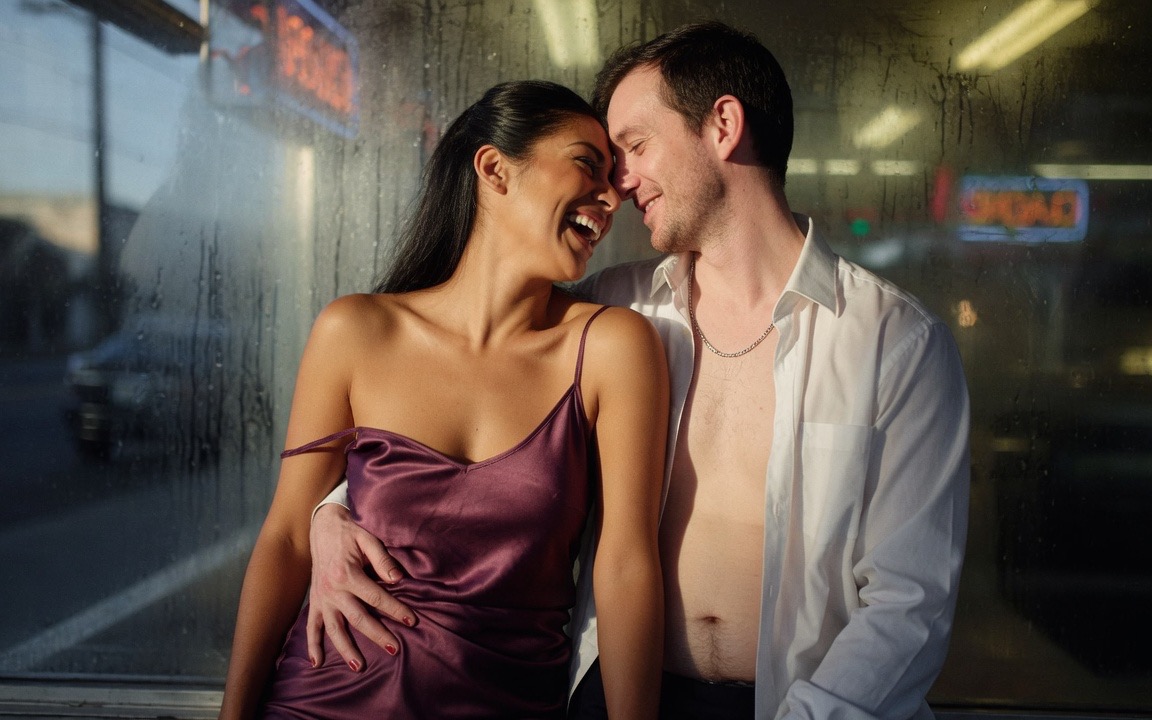
His kitchen held nothing worth the name — a lemon gone soft in the bowl, a takeout box surrendering somewhere in the back of the fridge. He straightened up from studying it like a man reviewing evidence against himself.
“There’s a diner,” he said. “Two doors down. They do eggs like they mean it.”
She was still in last night’s dress, the one that had made perfect sense at eleven and now, at nine, felt like a costume from a play she no longer had the script for. She checked herself in the chrome of the toaster and didn’t flinch.
“Like this?” she asked. She meant the dress. She meant the whole visible truth of the last twelve hours, about to walk past a hostess stand in broad daylight.
“Like this,” he said, and held the door.
The street did something a bedroom never has to. It named things. A man walking his dog looked twice — not unkindly, just arithmetic, the obvious sum of a rumpled dress and a man who hadn’t shaved.
She laughed, low, and took his arm before she’d decided to. “We look exactly like what we are.”
“Is that a problem?”
“No,” she said, surprised to find it wasn’t. “It’s just loud, is all. The night was quiet about it.”
He fell into step beside her the way some men only manage after months — no half-beat of hesitation, no checking his watch, no performance of casualness for a stranger’s dog. The diner’s window had fogged at the edges. Someone’s coffee cup had left a ring on the specials board.
Inside, a waitress set down two waters without asking and looked at them the way waitresses look at everyone who walks in like that: like she’d seen it a hundred times and would see it a hundred more, and thought no less of either of them for it.
Neither of them said what the night had been. They didn’t have to. They’d already said it, walking out the door together into a street that didn’t know how to keep a secret — and hadn’t asked either of them to keep one.