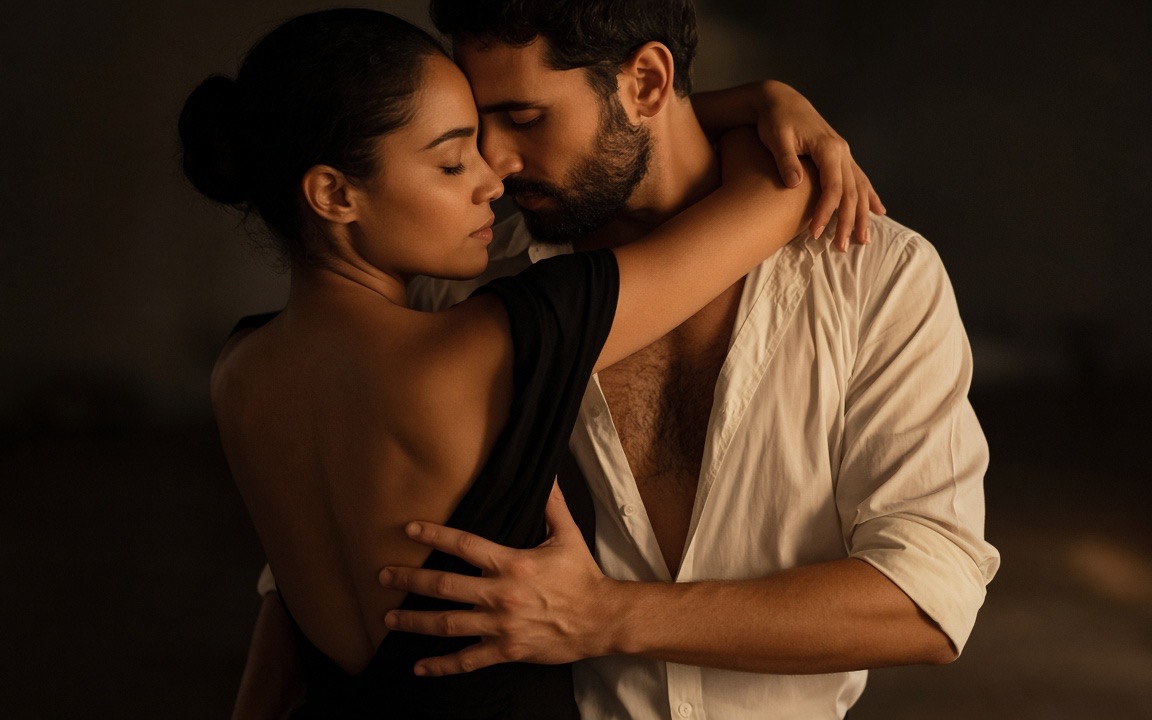
By one in the morning she had refused four men without a word — at a milonga you simply don't look up. All night she had watched the far end of the room, where a man in a white shirt did not dance either.
The cortina played, thirty seconds of not-tango while the floor clears. As it faded she lifted her eyes; he was already looking. He tipped his chin, once. She was on her feet before she had agreed to anything.
They met at the edge of the floor without speaking. He opened his arm; she stepped in, and his hand settled on the bare place below her shoulder blades where the dress gave out — warm, flat, in no hurry.
By the third tango she was breathing when he breathed, her cheek against his jaw, eyes closed — one long step where his weight came toward her and simply stayed.
Then the cortina again. All around them, couples let go and drifted back to their chairs.
Three songs, then you let go; stay for another set and the whole room knows what it means. His hand did not move from her back. Hers did not move from his neck.
The next tanda was slower, a violin with a crack in its voice. They leaned through it more than danced it.
At the coat rack he held her coat open and did not quite give it up. "I don't know your name," he said against her ear — the first words between them.
She took the coat and turned the collar up. "Walk me home," she said. "Ask me again at the door."