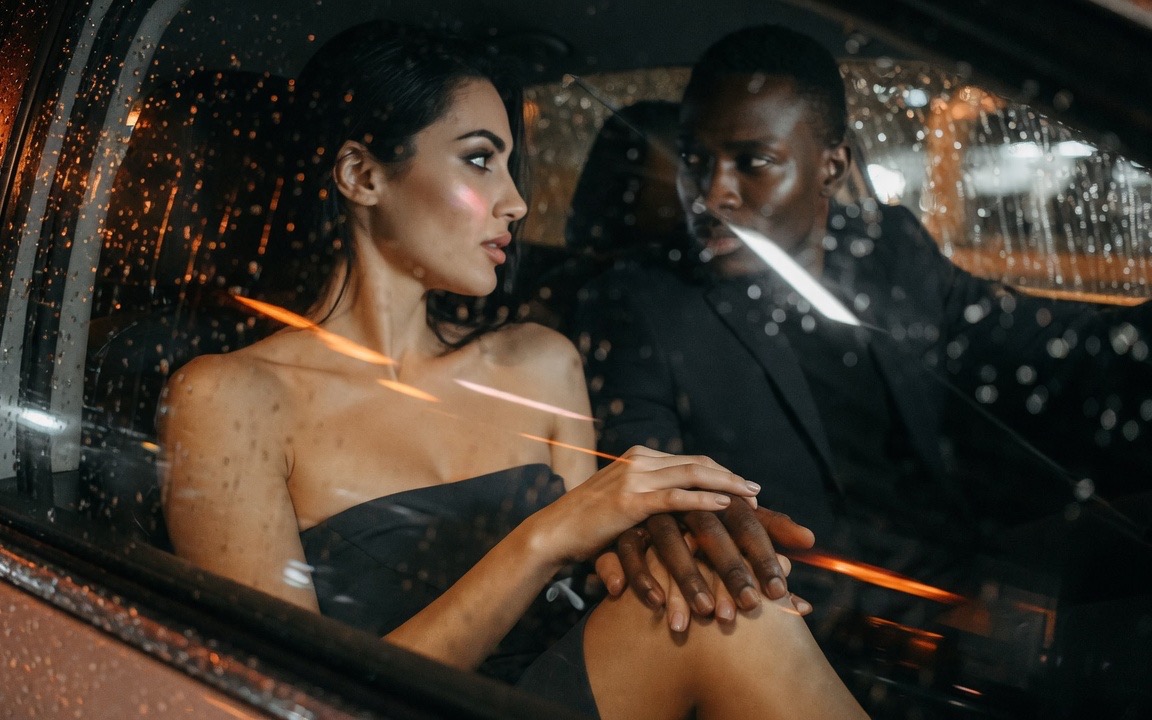
She had not meant for it to go this late. He had not meant to stay.
The restaurant had been closing around them — chairs going up on tables, a server lingering with practiced patience — and they'd both noticed, and neither of them had been willing to be the one to say it. This was the way they'd always been: two people who lost time together the way other people lose keys, quietly and without noticing until it was far too late.
Outside it was raining. "I can drive you," he said.
She knew what he meant and what he didn't. She got in the car.
The city moved past the windows in streaks, sodium orange and white. She watched the lights instead of him, which was how she'd always managed the worst of it — keeping him peripheral, plausibly deniable, at the very edge of what she allowed herself to want.
"You're quiet," he said.
"I'm thinking."
"About what?"
She turned to look at him then. He was watching the road, hands loose on the wheel, as unhurried as he'd always been — patient in the particular way that had once driven her to distraction. That patience was what she'd missed most, afterward, though she'd spent a long time not admitting it even to herself.
"Whether I've made this into something it isn't," she said.
He didn't answer immediately. The wipers kept time. "Have you?"
She looked back at the rain on the glass. "No," she said. "I don't think I have."
He signaled and turned onto her street. She lived two blocks in the other direction. Neither of them said anything about it.